2026-06-22 14:39:46
From Environmental Testing to Climatic Testing
Lithium-ion battery testing covers more than one type of environmental stress.
Our previous article explained how Environmental Test Chambers support battery testing through temperature, humidity and safety control. This article takes the next step: how climatic test chambers reproduce controlled environmental conditions for EV batteries and ESS systems, and what engineers should consider when selecting one.
For active battery testing, temperature range alone is not enough. Engineers must also evaluate humidity requirements, charge-discharge heat load, battery size, cooling method and possible battery failure risks.
A properly selected climatic test chamber should maintain stable conditions with the actual battery load while supporting the safety requirements of the project.
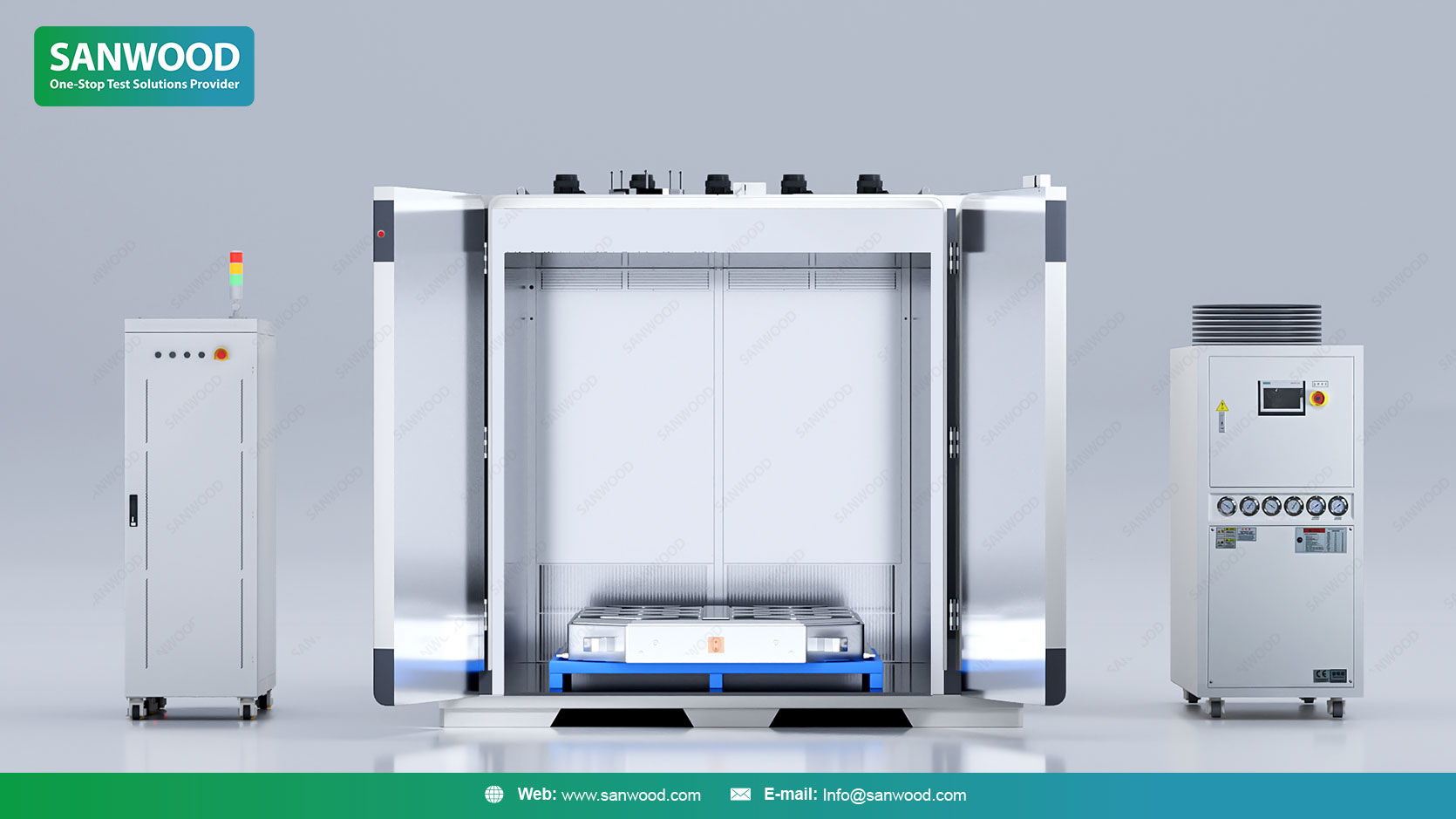
Lithium-ion battery performance changes with temperature.
Low temperatures can increase internal resistance, reduce available capacity and limit charging performance. High temperatures may accelerate aging, shorten cycle life and increase safety risks. Repeated temperature changes can also place stress on battery connections, seals, enclosures and thermal management components.
Humidity is particularly relevant to complete EV battery packs and outdoor ESS systems. Moisture exposure may affect:
· Pack enclosures and seals
· Connectors and terminals
· Electrical insulation
· BMS electronics and sensors
· Metal components
· Cooling system connections
Climatic testing helps engineers evaluate battery performance, durability and safety under controlled operating and storage conditions.
A standard climatic test chamber is mainly designed to control temperature and humidity.
A battery test chamber combines environmental simulation with configurations required for lithium-ion battery operation and safety. When batteries are charged or discharged inside the chamber, they generate heat. Under abnormal conditions, they may also release gas, smoke or excessive heat.
Depending on the test object and risk assessment, additional configurations may include:
· Pressure relief
· Gas and smoke detection
· Emergency exhaust
· Fire protection interfaces
· Door safety interlocks
· Remote monitoring
· Alarm and shutdown logic
A general climatic chamber may be suitable for battery materials, components or non-energized samples. For live cells, modules and packs, purpose-built Battery Test Chambers are normally more appropriate.
The required temperature range should reflect the actual battery test program rather than the widest specification available.
Engineers should define:
· Minimum and maximum test temperatures
· Temperature change rate
· Temperature uniformity and stability
· Required humidity range
· Battery heat generation
· Test duration and recovery time
Empty-chamber performance does not always represent performance with a large, heat-generating battery inside. Temperature change rates and cooling capacity should therefore be evaluated under the expected test load.
For projects requiring combined temperature and humidity exposure, Temperature Humidity Test Chambers can be configured according to the battery size, humidity range and test profile.
During charge and discharge, lithium-ion batteries become active heat sources.
The heat generated depends on battery chemistry, internal resistance, state of charge, cycling rate and pack design. If this heat load is not included when selecting the chamber, the system may struggle to maintain the required temperature.
This can lead to unstable test conditions, longer recovery times and unreliable results.
Before specifying the chamber, engineers should confirm:
· Maximum charge and discharge power
· Expected battery heat generation
· Battery cycler connections
· Cable port size and location
· BMS communication requirements
· Temperature and voltage monitoring
· Emergency-stop coordination
· Liquid-cooling conditions
For active cycling projects, Battery Charge-Discharge Test Chambers can be integrated with battery cyclers, monitoring equipment and external liquid-cooling systems.
Many EV and ESS battery packs use liquid cooling. When the cooling circuit operates during testing, it becomes part of the overall thermal balance.
Engineers should provide information about:
· Coolant type
· Inlet temperature
· Flow rate and pressure
· Expected heat removal
· Connection method
· Leak monitoring requirements
The climatic chamber, battery cycler and cooling unit should be evaluated as one test system. Considering them separately may result in insufficient chamber capacity or unrealistic test conditions.
There is no universal safety configuration for lithium-ion battery testing.
A small cell performance test and a high-energy battery pack abuse test involve different risks. Chamber safety should be based on the battery energy, test method, expected failure response and laboratory risk assessment.
Possible safety measures include:
· Reinforced chamber construction
· Pressure relief
· Gas, smoke or fire detection
· Emergency ventilation
· Fire suppression interface
· Over-temperature protection
· Electrical isolation
· Door interlocks
· Remote operation
· Automatic shutdown control
For projects with identified fire, venting or pressure-release risks, Explosion-Proof Battery Test Chambers may be configured with project-specific protection systems.
EUCAR hazard levels can help describe the severity of a possible battery response. However, EUCAR classification does not replace a complete risk assessment. Any claimed hazard-level capability should be supported by clearly defined chamber functions and test conditions.
Before requesting a quotation, engineers should provide more than the required temperature range and workspace size.
Selection factor | Information to confirm |
Test object | Cell, module, pack, rack or ESS unit |
Battery data | Dimensions, weight, voltage and energy |
Test profile | Temperature, humidity, rate and duration |
Electrical load | Charging, discharging and heat generation |
Cooling method | Air cooling or liquid cooling |
Safety risk | Gas, smoke, fire or pressure release |
Connections | Cables, coolant pipes and data interfaces |
Installation | Power, water, drainage and exhaust |
Large EV packs, battery racks and complete energy storage units may require Walk-In Battery Test Chambers with customized floors, doors, service ports and safety systems.
The best chamber is not necessarily the model with the widest temperature range. It is the system that can maintain the required conditions with the actual battery load while meeting the project’s safety requirements.
Depending on the battery type, application and market, test programs may refer to:
· UN 38.3
· IEC 62660
· ISO 12405
· IEC 62619
· UL 2580
· UL 1973
· IEC 62933 series
A climatic test chamber provides the environmental conditions required by relevant test procedures. It does not certify the battery or replace the complete test equipment, measurement systems and safety processes specified by a standard.
The applicable edition and test clauses should be confirmed before finalizing the chamber configuration.
Refrigeration technology is becoming an important consideration for laboratories planning long equipment lifecycles.
CO₂ refrigerant, also known as R744, has a global warming potential of 1. CO₂ Refrigerant Climate Chambers can provide a lower-GWP option for suitable temperature and humidity testing applications.
The final selection should still consider the required temperature range, cooling capacity, energy consumption, installation environment and long-term service support.
SANWOOD Technology provides Climatic Test Chambers for lithium-ion cells, modules, EV battery packs, ESS equipment and battery reliability laboratories.
Depending on the project, systems can be configured with:
· High- and low-temperature testing
· Temperature and humidity control
· Charge-discharge testing support
· Liquid-cooling connections
· Gas and smoke detection
· Pressure relief and emergency exhaust
· Customized cable and service ports
· CO₂/R744 refrigeration
SANWOOD also provides global installation, commissioning, operator training, preventive maintenance and technical support.
Each chamber is evaluated according to the battery size, test load, test profile, safety requirements and installation conditions rather than selected from temperature range alone.
It may be suitable for battery components or non-energized samples. Testing energized batteries normally requires heat-load calculations and additional safety configurations.
Yes, when the chamber is designed for active cycling and includes suitable cooling capacity, cable ports, monitoring and emergency controls.
It depends on the test purpose. Humidity testing is particularly relevant to complete EV packs and outdoor ESS systems because moisture may affect seals, insulation, connectors and electronics.
No chamber can guarantee the prevention of thermal runaway. Its safety systems help detect abnormal conditions and manage the expected consequences identified by the project risk assessment.
Climatic testing helps engineers understand how lithium-ion batteries perform under temperature changes, humidity exposure and active cycling. However, environmental accuracy is only one part of a complete battery testing system.
When energized cells, modules or high-energy packs are tested, the next question is how the chamber should respond to gas release, smoke, pressure, fire or thermal runaway. These risks determine whether additional monitoring, pressure relief, emergency exhaust or explosion-protection measures are required.
Visit the Contact / Inquiry Page to discuss climatic testing requirements for your EV or ESS battery project.
Sanwood is not just a company; it is a commitment to delivering high-quality products that stand the test of time.

 English
 中 文
中 文



 info@sanwood.com