Website: Sanwood
Language:
English

Explosion-Proof Battery Test Chamber

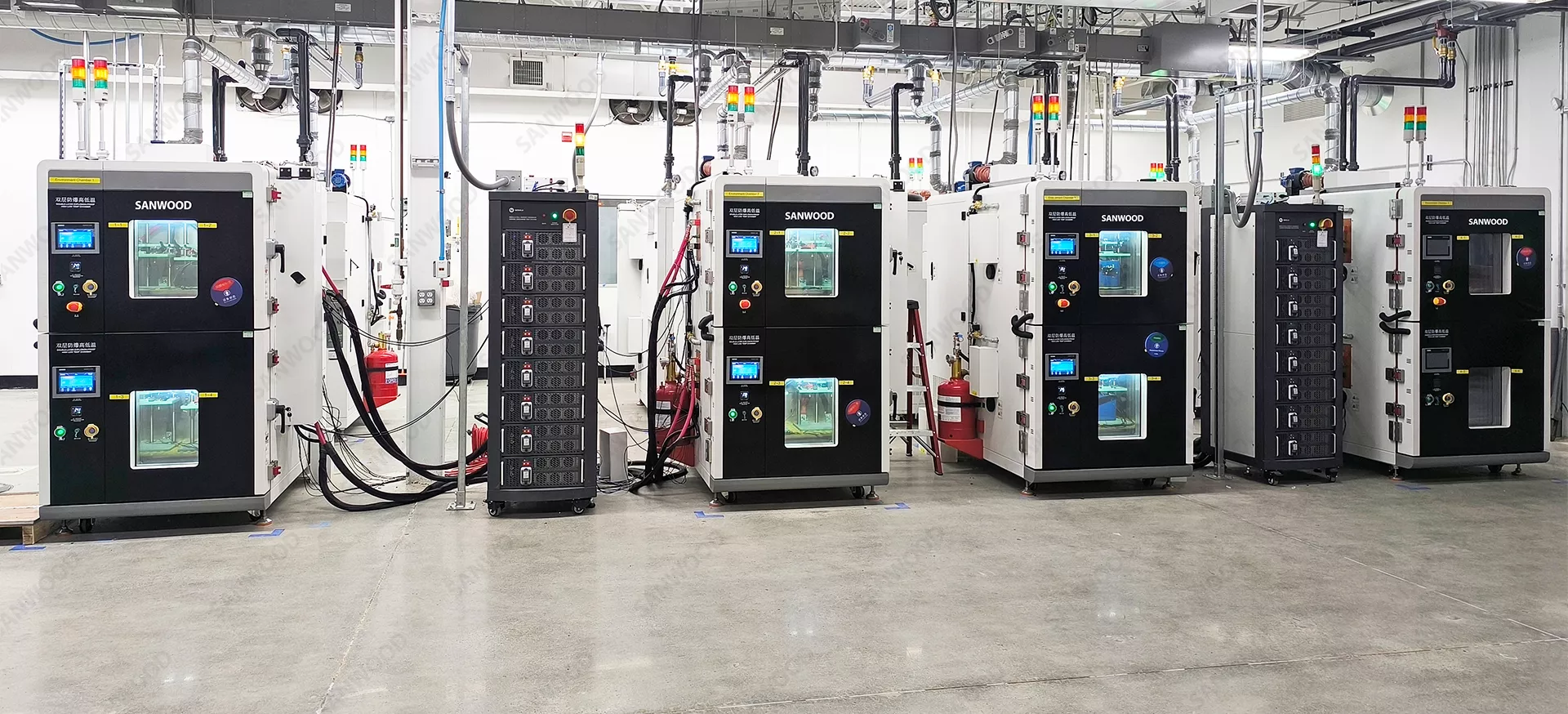
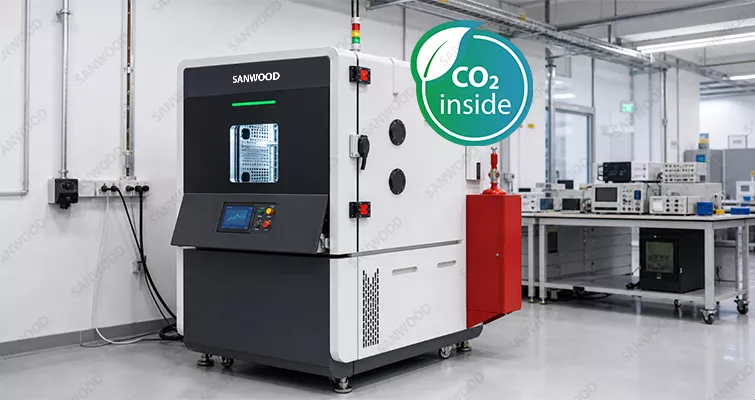
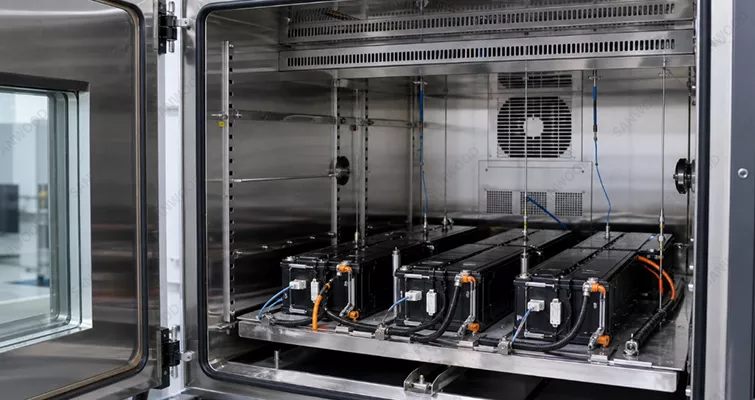
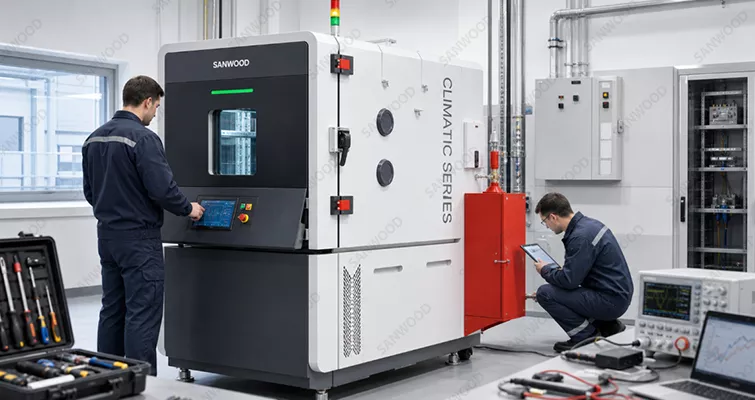
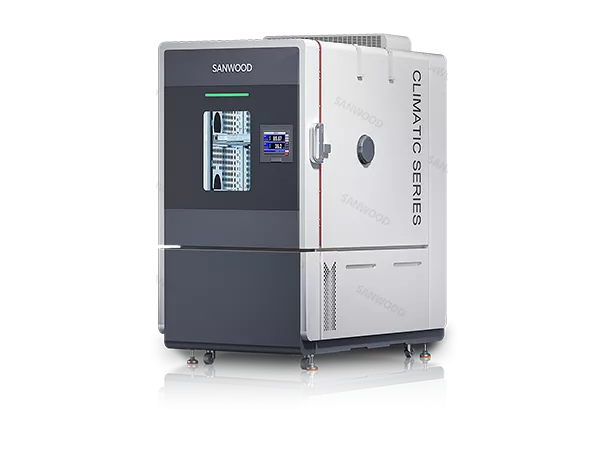
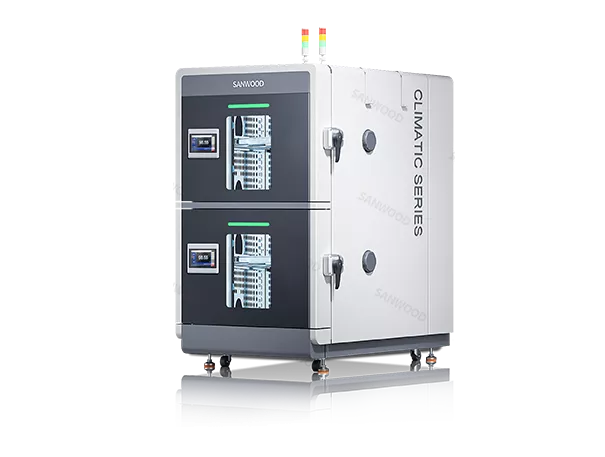
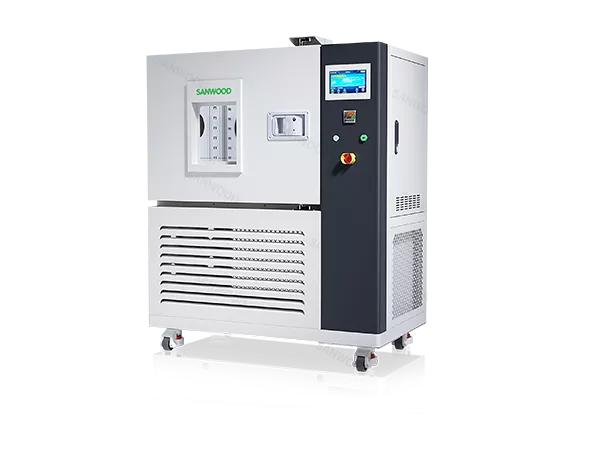
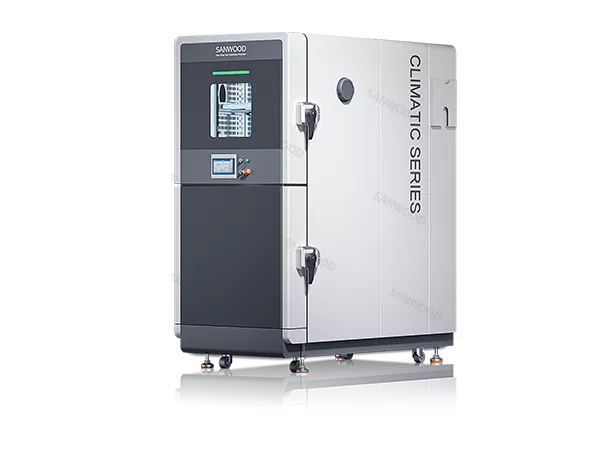
The Sanwood Explosion-Proof Battery Test Chamber is a highly specialized environmental test chamber (also widely utilized as a climatic test chamber) engineered for safety-critical thermal testing of small-sized batteries, including lithium-ion cells, pouch cells, and cylindrical cells. Built with a reinforced structural explosion-proof design, it integrates an eco-friendly CO2 (R744) refrigeration system with GWP=1 to fully comply with strict European F-Gas regulations. The system features advanced active safety mechanisms—such as automatic pressure relief venting, anti-explosion door chains, and gas detection—ensuring absolute laboratory containment up to EUCAR Hazard Level 7 during sudden thermal runaway events.

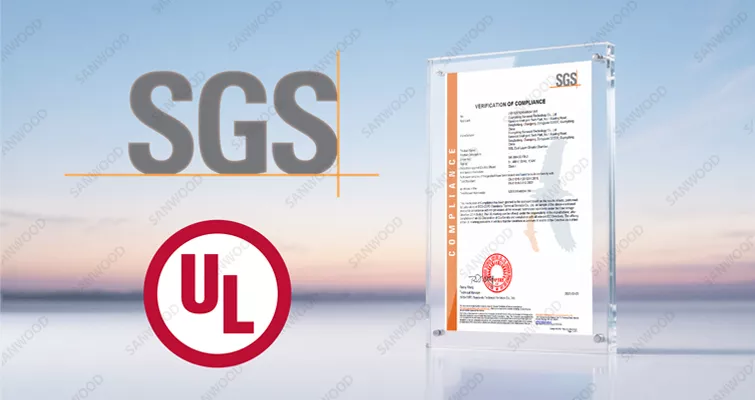
Optimized for automotive OEMs, consumer electronics manufacturers, and R&D labs, this compact system is SGS/UL CE certified, ensuring flawless alignment with global safety directives. It syncs seamlessly with external battery cyclers for safe, repeatable environmental simulation, guaranteeing your next-generation cell technologies confidently achieve full compliance with UL 2580, IEC 62133, UN 38.3, and UL 1642 standards.

Compact Battery Cell Testing

Heavy-duty explosion-proof containment engineered to [ATEX / IECEx] standards for small-sized batteries. Features advanced venting and gas detection for 100% secure UL 2580 and EUCAR Hazard Level 7 testing.

Explosion-Proof Battery Test Chamber

Advantages of Sanwood Test Chamber

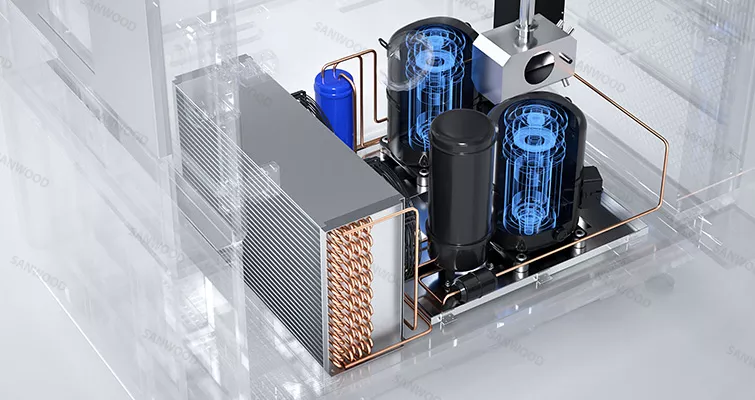
  • Eco-Friendly CO2 Refrigeration (GWP=1): Utilizes a future-proof R744 (CO2) cooling system with a Global Warming Potential of 1, completely bypassing HFC phase-outs and F-Gas restrictions while delivering exceptional low-temperature performance.
  • Third-Party SGS/UL CE Certification: Vetted and certified by world-leading inspection bodies (SGS/UL), providing verifiable proof of compliance with European health, safety, and environmental protection legislation.
  • Heavy-Duty Explosion Protection: Engineered with a reinforced heavy-duty core casing that is field-proven to completely contain high-energy deflagrations and pressure spikes up to EUCAR Hazard Level 7..
  • Space-Saving Compact Footprint: Specially optimized for high-density R&D laboratories, offering maximum internal cell-testing volume with a minimized external physical profile..
  • Active Hazard Mitigation Systems: Equipped with automated mechanical pressure relief ports, multi-point hazardous gas detection (CO, H2), and heavy-duty industrial anti-explosion door chains.
Explosion-Proof Battery Test Chamber

Application Fields Of Battery Test Chamber

  • Automotive OEMs & Tier 1 Suppliers: F-Gas compliant cell-level screening, validation, and thermal abuse testing prior to EV battery pack integration.
  • Consumer Electronics Brands: Green-certified safety and reliability qualification for smartphone, laptop, and wearable battery cells.
  • Battery Material Manufacturers: Continuous thermal stability testing for next-generation anode/cathode chemistry and solid-state battery prototypes under strict corporate ESG mandates.

  • Third-Party Certification Labs: High-throughput commercial safety verification and compliance testing under regulatory international mandates.
Explosion-Proof Battery Test Chamber

Test Standards of Battery Test Chamber

  • SGS / UL CE: Equipment Safety-Third-party certified compliance for European machinery and safety directives.
  • UL 2580: EV Battery Safety-Automotive-grade cell-level thermal abuse and propagation testing.
  • IEC 62133: Consumer Safety-Mandatory safety requirements for portable sealed secondary lithium cells.
  • UN 38.3: Transport Regulation-High-altitude, thermal cycling, and vibration simulation for global logistics.

  • UL 1642: Component Level-Standard for safety of user-replaceable and technician-replaceable lithium cells.
Explosion-Proof Battery Test Chamber

Control System of The Test Chamber

The control system of the Sanwood test chamber adopts the world's leading software and hardware system to ensure that the test chamber operates under preset conditions, provide accurate and reliable experimental data, and help users achieve precise control and data collection of various experimental conditions.

  • Controller: It adopts the controller imported from South Korea Sanwon and the self-developed control system, which can be equipped with Siemens control system and equipped with RS232, RS485 and Ethernet communication ports.
  • Programmable control: It supports setting experimental programs, such as heating, cooling, constant temperature time, etc., and can execute multiple program settings, and supports advance reservation startup function.
  • Multiple languages optional: English, Korean, Russian, Chinese and Japanese.
  • Remote monitoring: Using network remote technology to achieve remote control, the test chamber can be monitored at any time, and the current data can be viewed through the user's PC and mobile phone, which improves the convenience of testing.

The specific control system of the test chamber will vary depending on the model. Please read the "Sanwood Environmental Test Chamber Manual" carefully before use and comply with the safety operating procedures.

Explosion-Proof Battery Test Chamber

Refrigeration System of The Test Chamber

The refrigeration system of the test chamber is a complex and important system. The stability of the refrigeration system is crucial to the accuracy and reliability of the test results.

  • Sanwood Technology has developed a refrigerant hot gas defrosting technology, which effectively melts the frost on the evaporator by injecting high-temperature and high-pressure refrigerant steam into the heat exchanger in the test chamber. This not only ensures that the evaporator does not frost, but also greatly reduces the energy consumption of the equipment.
  • The refrigeration unit adopts an internationally renowned brand.
  • Optimize the layout of the refrigeration system, and adopt VRF (refrigerant flow control) technology based on the PID cold end output principle to achieve low-temperature energy-saving operation, which can reduce energy consumption by 30% under low-temperature conditions.
  • The refrigeration system adopts a modular design, with low failure rate, few welding points, high refrigeration efficiency, good reliability, simple maintenance, and low maintenance cost.
  • Optional CO₂ refrigeration system, GWP=1.


  • Basis Data

  • FAQ+

Want to know more? Talk to an expert! Leave a message and a specialist will get back to you.

Information on how we processyour personal data.