Website: Sanwood
Language:
English

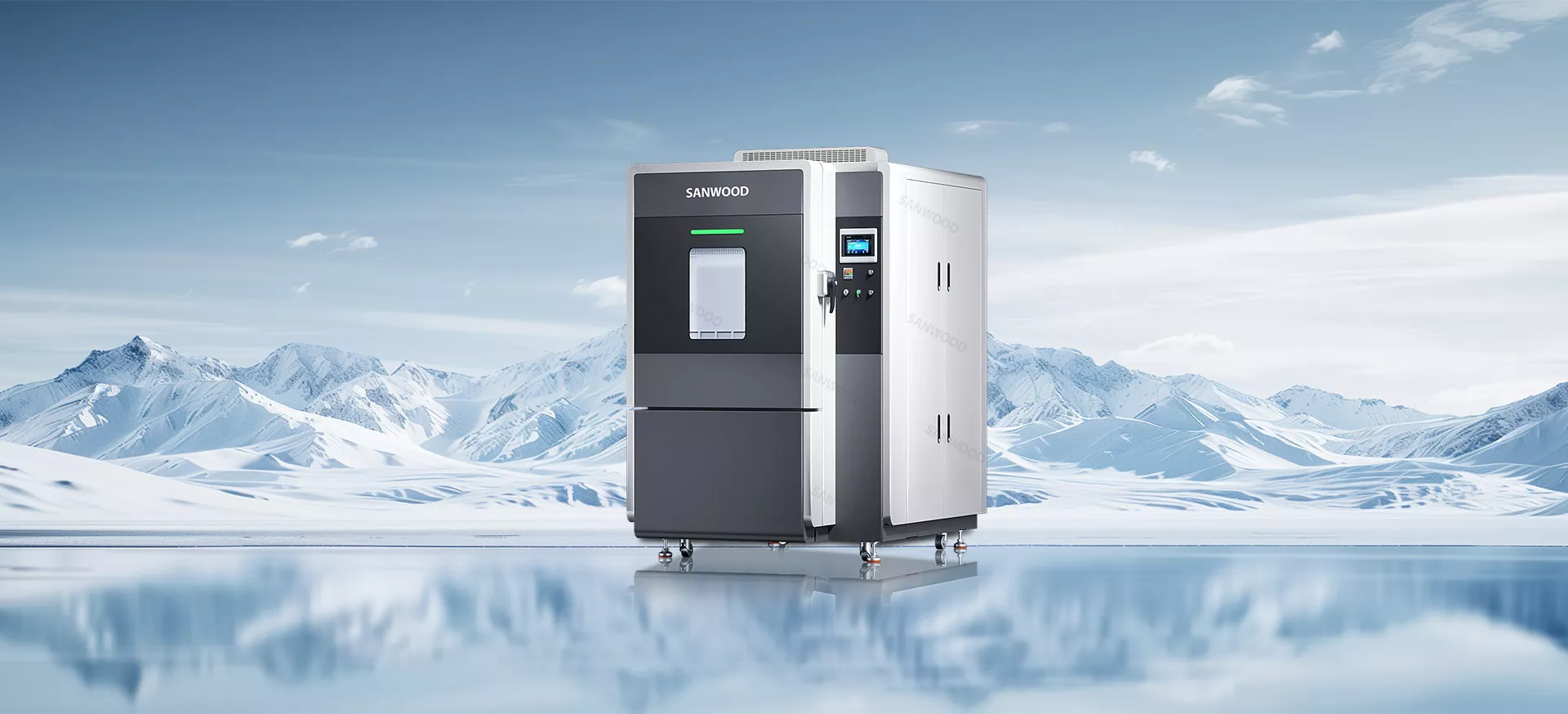
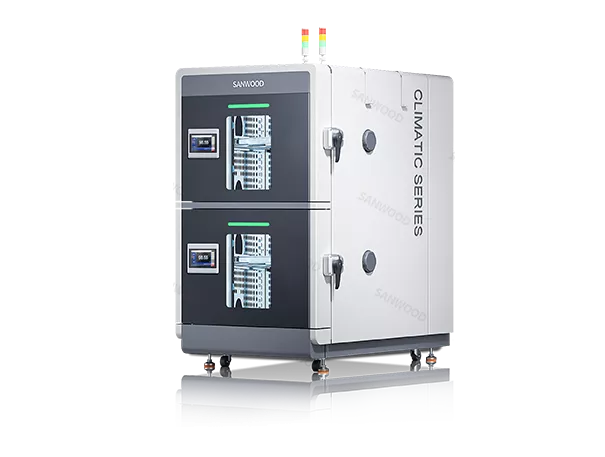
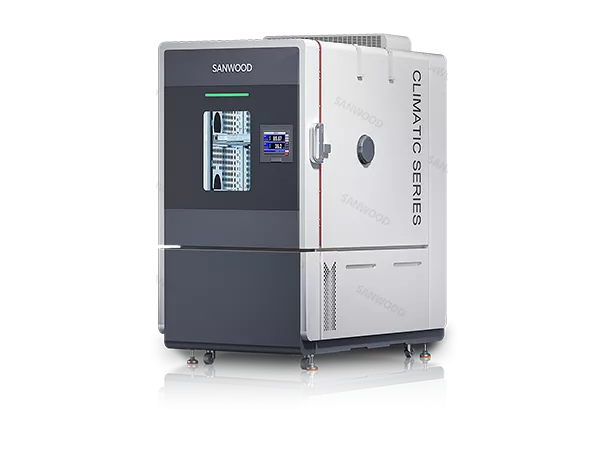
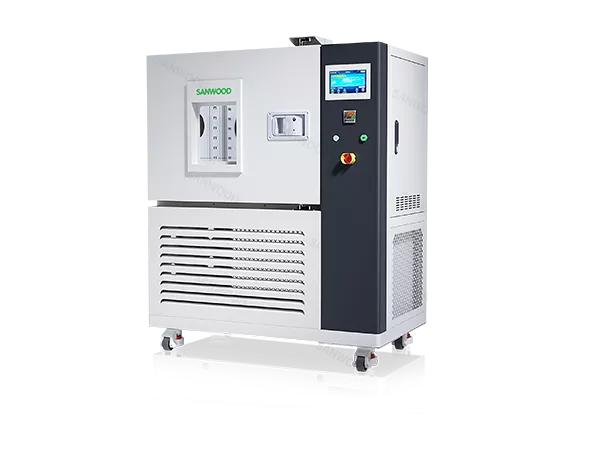
ESS Rapid-Rate Temperature Change Test Chamber

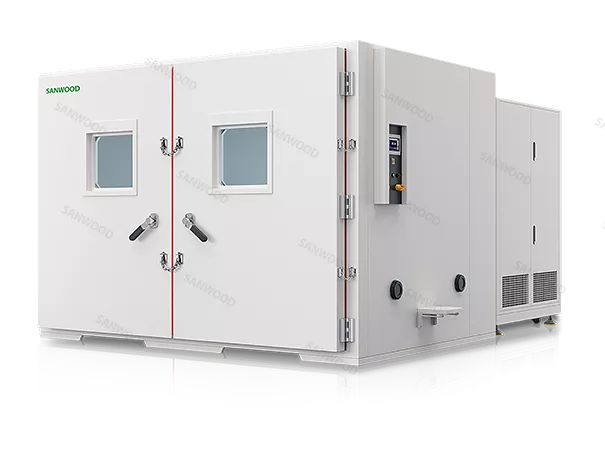
SANWOOD Technology ESS Rapid-Rate Temperature Change Test Chamber is designed for Environmental Stress Screening, also known as ESS. It applies fast heating and cooling cycles to help reveal hidden defects before products enter field operation.

The chamber supports multiple temperature change rate selections from 5℃ to 25℃/min, making it suitable for different reliability screening levels, sample loads, and test methods. As a specialized environmental test chamber, it is used for electronics, PCBs, sensors, connectors, control modules, communication products, automotive electronics, aerospace components, and industrial assemblies.

Unlike a standard climatic test chamber used for gradual temperature or humidity simulation, this chamber focuses on rapid temperature change and repeated thermal stress.

Fast Temperature Cycling for Environmental Stress

Designed for ESS testing with selectable temperature change rates from 5℃ to 25℃/min to expose latent defects in electronics, components, modules, and assemblies.

ESS Rapid-Rate Temperature Change Test Chamber

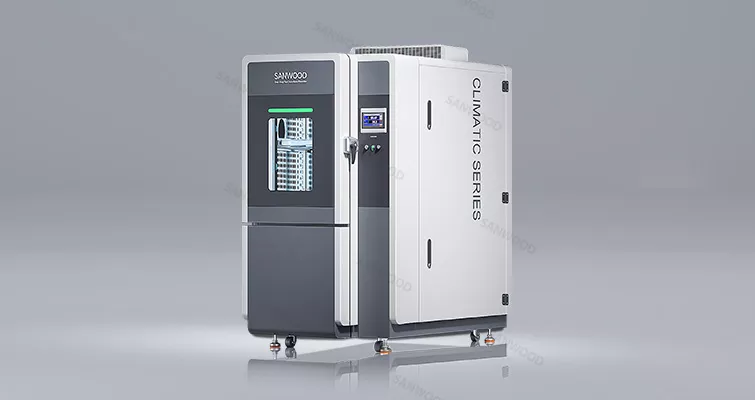
Rapid-Rate Temperature Change for ESS

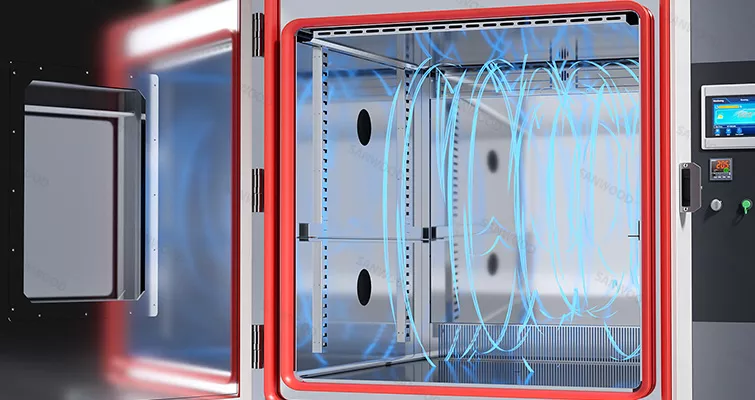
The chamber is built to create faster temperature transitions than standard temperature chambers. Rapid temperature cycling helps accelerate expansion and contraction stress in components and assemblies.

Key advantages: selectable temperature change rates from 5℃ to 25℃/min, repeatable thermal stress cycles, stable test control, efficient defect screening, suitable for production reliability checks, and practical use in ESS programs.

The selectable ramp-rate design helps users match screening intensity to product type, sample heat load, reliability target, and test procedure.

ESS Rapid-Rate Temperature Change Test Chamber

Selection Factors for Reliable Screening

For an ESS chamber, temperature range alone is not enough. The temperature change rate, load condition, airflow, recovery performance, and sample heat capacity all affect real test results.

Key factors: temperature range, required ramp rate, heating rate, cooling rate, chamber volume, sample load, airflow uniformity, recovery time, dwell time, cycle count, product temperature monitoring, cable ports, and data recording.

Selection should be based on the actual sample load, not only empty-chamber performance.


ESS Rapid-Rate Temperature Change Test Chamber

Applications and Failure Risks

Rapid temperature change testing is useful for products that need early defect detection, process screening, or reliability improvement before shipment.

Typical applications: PCBs, semiconductors, sensors, connectors, relays, control modules, automotive electronics, communication equipment, aerospace electronics, power modules, industrial controllers, and small assemblies.

Failure risks evaluated: solder joint weakness, connector instability, PCB micro-cracks, material fatigue, coating defects, insulation problems, intermittent electrical failure, and assembly stress caused by repeated temperature cycling.


ESS Rapid-Rate Temperature Change Test Chamber

Control, Airflow and Energy-Saving Refrigeration Design

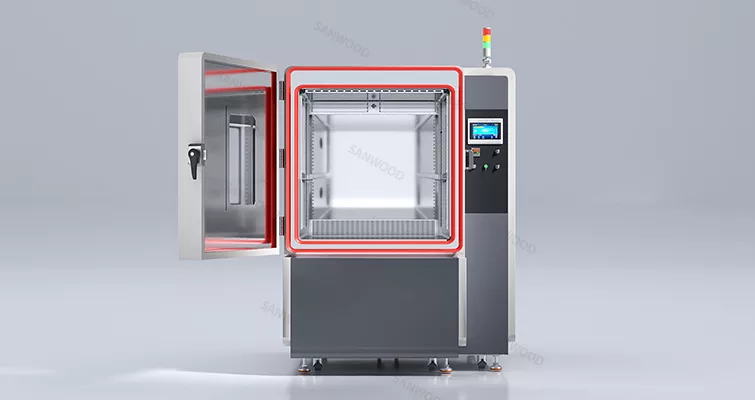
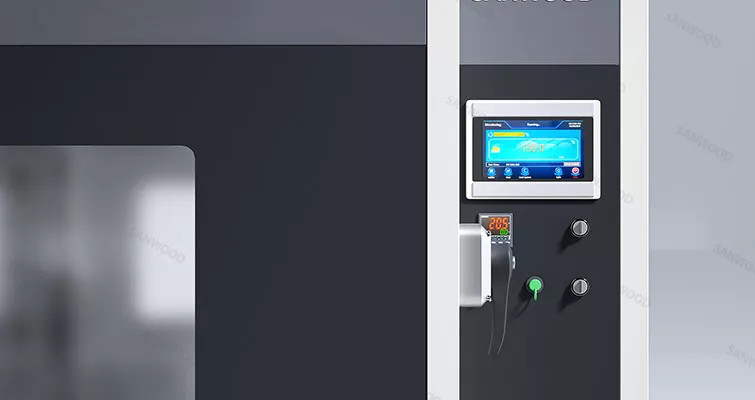
The chamber uses programmable control for temperature profiles, dwell time, cycle count, alarms, and optional data recording. Strong airflow and refrigeration capacity are important for achieving repeatable rapid temperature changes under real sample load.

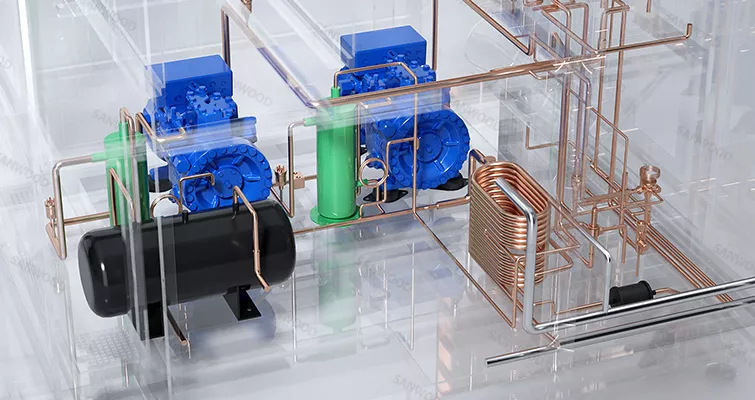
SANWOOD adopts advanced cooling balance technology and coolant flow rate control technology to improve refrigeration efficiency. Energy saving can reach more than 30% depending on chamber configuration, test profile, ambient conditions, and operating mode.

System features: programmable touchscreen controller, rapid heating and cooling control, multi-step cycling profiles, optimized airflow, high-performance refrigeration system, cooling balance control, coolant flow rate control, optional RS232 / RS485 / Ethernet communication, optional PC monitoring, optional data logging, and alarm protection for abnormal operation.

Final configuration should be confirmed according to sample size, load, target ramp rate, temperature range, airflow requirement, energy-saving target, and test duration.

ESS Rapid-Rate Temperature Change Test Chamber

Standards, Customization and Service

The chamber can be configured to support test conditions related to ESS and temperature cycling methods, including IEC 60068-2-14 change of temperature, JESD22-A104 temperature cycling, MIL-STD-810 environmental methods, and customer-specific reliability screening procedures.

Final compliance depends on the complete test method, sample type, sensor setup, calibration status, temperature change rate, dwell time, operating procedure, and third-party assessment.

Customization options: temperature range, temperature change rate configuration, chamber volume, sample rack, cable ports, product temperature monitoring, communication and data recording, refrigeration system configuration, energy-saving control configuration, and power supply by destination country.

SANWOOD Technology can provide model selection support, customization guidance, installation assistance, maintenance, repair, and technical service according to project requirements.

  • Basis Data

  • FAQ+

Want to know more? Talk to an expert! Leave a message and a specialist will get back to you.

Information on how we processyour personal data.